


GI Stasis: The Emergency Every Rabbit Owner Needs To Know About
GI Stasis is the most common life-threatening emergency in domestic rabbits. The reason it is often fatal is because it can be difficult to detect until it is already too late. By the time many owners realise something is wrong, the window for medical intervention may have already passed.
What is GI Stasis?
GI Stasis (Gastrointestinal Stasis) is the slowing or complete cessation of normal gut movement in a rabbit. Unlike most mammals, food, fluid, and the gases produced by fermentation all need to move continuously through the rabbit’s system. When movement stops or slows significantly, gas accumulates and the gut contents begin to dehydrate and compact. The resulting pressure and pain cause the animal to stop eating and drinking, which makes the problem worse.
- A rabbit that has not eaten for twenty-four hours is a medical emergency. Contact your veterinarian immediately.
Early warning signs of GI Stasis
- Fewer or smaller droppings than normal.
- Soft or misshapen droppings after a period of normal output.
- Reduced appetite, eating less enthusiastically, or leaving food that is normally consumed immediately.
- Less activity than normal, sitting still in a hunched posture.
- Tooth grinding (bruxism).
- Reluctance to move or a pressing of the belly against a cool surface.
What causes GI Stasis?
- Insufficient hay is the primary dietary cause, as long-strand fibre from hay is what keeps the gut moving. An rabbit not consuming substantial amounts of hay every day is at an elevated risk of GI Stasis.
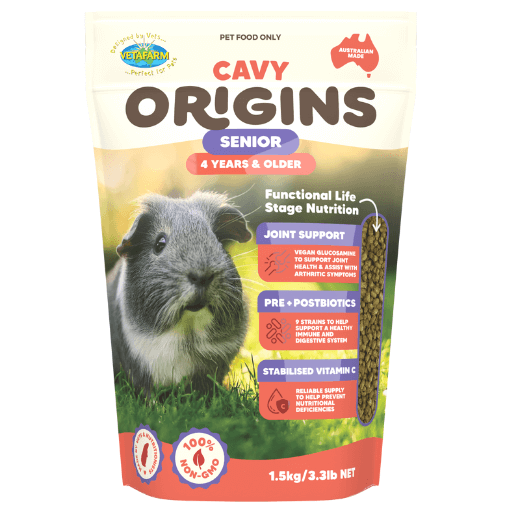
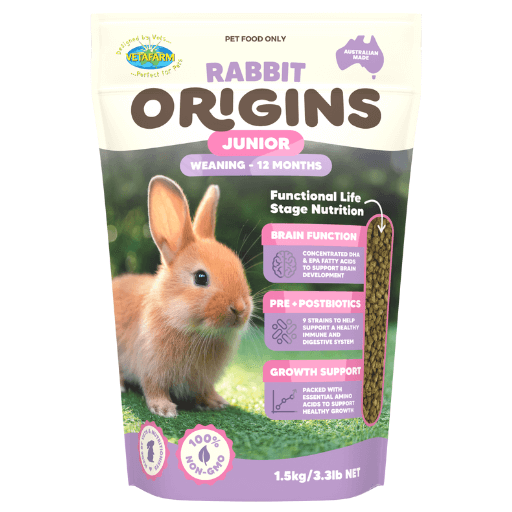
- Too many pellets can slow gut transit. Pellets are dense and move more slowly through the GI tract in comparison to hay. A hay-first diet with pellets as a complement is the correct balance, which is why Vetafarm recommends a diet of 75% hay, 20% Origins Pellets and 5% treats or fresh vegetables.
- Stress can be a significant trigger to GI Stasis. The gut and the nervous system are in constant communication, and elevated stress hormones can suppress gut motility. Stress-factors can include being around other animals, new environments, loud noises, experiencing routine changes, or the absence of a bonded companion.
- Dehydration reduces gut motility. Fresh water should always be available to your rabbits.
- Pain from any cause such as dental issues, arthritis, or injuries. Pain can reduce their appetite and trigger stasis.
How to prevent GI Stasis

- Unlimited fescue or lucerne hay at all times.
- Fresh water always available. Have multiple water sources in your rabbit’s enclosure.
- A species and life stage-appropriate pellet diet such as Rabbit Origins
- Consider using a probiotic such as Synbiotic 180-S to support good gut bacteria.
- Enrichment that encourages movement throughout the day.
- Minimising unnecessary stress and maintaining consistent routines.
- Regular veterinary checks including dental assessments.
What to do if you suspect your rabbit has GI Stasis:
- Contact your vet immediately.
In the meantime:
- Offer syringe water if the rabbit will accept it.
- Provide fresh hay.
- Encourage gentle movement.
- Do not force-feed food or administer any medication not specifically prescribed for your rabbit by a veterinarian.
The veterinary treatment for GI stasis can include giving fluids, medication, pain relief, and in some cases, manual gut massage. If GI Stasis is left untreated for twelve to twenty-four hours, your rabbit may require hospitalisation, intensive care, and surgery.