

Sand Colic in Horses: Signs, Prevention and How Equilax Can Help
Sand colic is a serious digestive condition that occurs when sand and dirt accumulate in a horse’s gut. Horses that graze or are fed in sandy yards are particularly at risk.
Recognising the signs of sand accumulation, reducing sand ingestion through good management practices and supporting sand clearance with a psyllium supplement such as Equilax will help maintain digestive health in horses.
What is sand colic in horses?
Sand colic occurs when ingested sand accumulates within a horse’s large colon where the mass of sand affects the normal function of the digestive tract.
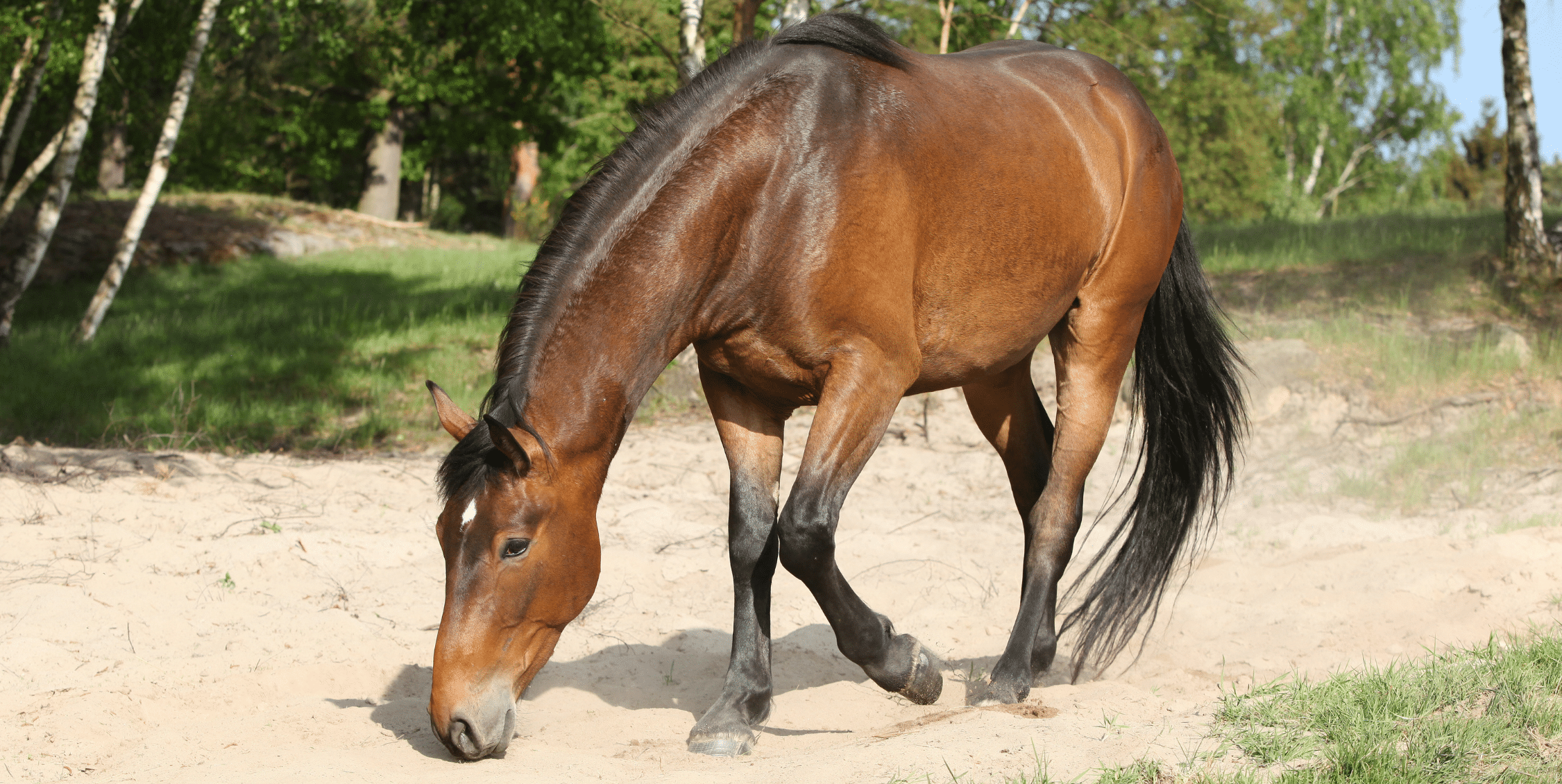
Horses ingest sand while grazing short pastures or eating hay and feed directly from the ground. While small amounts of sand may pass naturally through the digestive system, over time larger accumulations can interfere with normal gut function.
Accumulated sand may irritate the intestinal lining, disrupt normal gut movement and, in severe cases, contribute to painful intestinal blockages.
What are the signs of sand colic in horses?
Sand colic can develop gradually, which means the early signs may be difficult to recognise.
Common signs associated with sand accumulation:
- Diarrhoea: Sand can irritate the intestinal lining and interfere with normal water and nutrient absorption.
- Unexplained weight loss: Ongoing digestive disruption may affect your horse’s ability to maintain condition.
- Abdominal pain or discomfort: Your horse may paw at the ground, look repeatedly at their abdomen, become restless or lie down more frequently than usual.
- Recurring episodes of colic: Horses exposed to sandy environments may experience repeated bouts of colic.
How to reduce sand ingestion in horses
Reducing the amount of sand your horse consumes is an important part of managing the risk of sand accumulation.
Simple management strategies include:
- Using above-ground feeders and hay nets instead of feeding directly from sandy ground.
- Placing rubber mats beneath feeders to catch dropped hay and feed.
- Providing consistent access to quality hay and feed to reduce foraging directly from bare ground.
- Practising rotational grazing to help prevent overgrazing and maintain pasture coverage.
- Regularly monitoring horses that live, graze or are exercised in sandy environments.
While good management can help reduce sand ingestion, completely preventing horses from consuming sand can be difficult.
How does psyllium work?
Psyllium is a natural soluble plant fibre commonly used to support sand clearance and gastrointestinal health in horses.
When psyllium enters the digestive tract, it absorbs moisture and forms a gel-like matrix. This gel supports the movement of accumulated sand through the gut and out of the body.
For horses regularly exposed to sandy environments, a psyllium-based supplement is part of an ongoing sand management program, alongside appropriate feeding and pasture management.
What is Equilax?
Equilax is an apple-flavoured, psyllium-based gastrointestinal supplement designed for horses exposed to sandy environments.
Its pelleted formulation provides an easy and palatable alternative to traditional loose psyllium husk. Loose psyllium husk can be dusty, difficult to measure and will be rejected by some horses.
The apple-flavoured pellets make Equilax simple to feed by hand or add to your horse’s regular feed. Equilax is highly regarded for its palatability by equine professionals.
Why choose Equilax instead of loose psyllium husk?
Traditional loose psyllium products can be dusty, difficult to feed and easily blown away. Some horses may also refuse feed containing loose psyllium, making consistent dosing difficult.
Benefits of the pelleted format include:
- Easy and accurate dosing.
- Less mess and waste than loose powders.
- No dusty psyllium blowing away during feeding.
- A palatable apple flavour.
- Easy feeding by hand or mixed with regular feed.
How much Equilax should I feed my horse?
Equilax can be fed by hand or mixed with your horse’s regular feed. Regular feeding helps to prevent sand build-up by constantly clearing material before it accumulates.
Maintenance Feeding
For horses regularly exposed to sandy environments, feed 0.5g of Equilax per kilogram of body weight twice weekly. For example, a 500kg horse will require a dosage of 250g.
Active Sand Colic Dose
If sand impaction is suspected or has been confirmed by your veterinarian, feed 1g of Equilax per kilogram of body weight for 4 days. For example, a 500kg horse will require a dosage of 500g.
Always follow the label directions.
Colic in horses may be life-threatening – contact your veterinarian if you suspect colic.
Is Equilax suitable for horses prone to laminitis?
Laminitis is a painful condition affecting the sensitive tissues inside a horse’s hoof. Horses prone to laminitis often require carefully managed diets that are low in sugar and starch.
Equilax is low in sugar and starch, making it suitable for laminitis-prone horses when fed as directed. Its palatable, pelleted formulation provides a convenient way to support sand clearance and gastrointestinal health as part of a carefully managed diet.
If your horse has specific dietary requirements, always consult your veterinarian for individual feeding advice.
The best approach combines good management – with regular monitoring and appropriate nutritional support. Feeding horses above ground, providing access to quality forage, preventing overgrazing and using Equilax all form part of a comprehensive sand management program for your horse.