As reptile keepers, we all want the best for our scaly friends. But when it comes to supplements, things can get confusing. Do you need Vitamin D3 if you have UVB lighting? Can you overdose your reptile?
Let’s clear up the confusion and look at why the combination of Calcium and Vitamin D3 is so vital.
Why do reptiles need Calcium and Vitamin D3?
Reptiles rely on calcium to build strong bones and maintain healthy muscle and nerve function. Carnivorous and insectivorous species often struggle to get enough calcium (and other vital nutrients) from their diet alone.
Without sufficient calcium, reptiles are at serious risk of developing Metabolic Bone Disease (MBD) – a group of disorders that can lead to deformities, weakness, and even death.
However, calcium can’t do its job alone. Reptiles also need Vitamin D3 to properly absorb calcium from their food. Without enough D3, even a calcium-rich diet won’t protect against MBD.
Calcium and D3 Are Better Together!
Just like Cookies and Cream, Han and Chewy, or Steve Irwin and crocs… Calcium and Vitamin D3 are a duo that belongs together.
Vitamin D3 acts as the vehicle that allows calcium to be transported to where it’s needed most in the body: bones, muscles, nerves, and other tissues.
“I use UVB lights – won’t Vitamin D3 overdose them?”
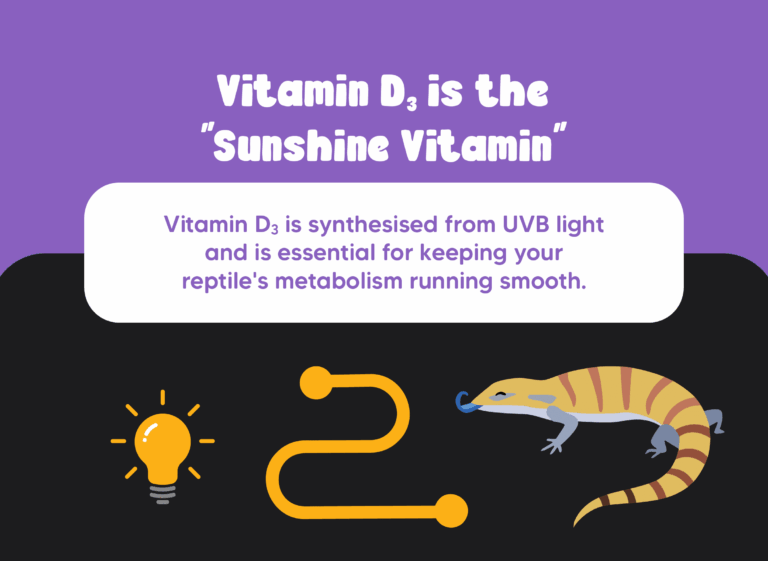
This is the most common question we get. While it is true that UVB lighting allows reptiles to synthesise their own Vitamin D3, it isn’t a guaranteed safety net.
How much D3 they produce depends on four major variables:
Even in well-lit enclosures, many reptiles still benefit from dietary Vitamin D3, especially if lighting setups aren’t optimal or the reptile is housed indoors year-round.
Vitamin D3 toxicity (Hypervitaminosis D)
Hypervitaminosis D is extremely rare, especially in Australia.
If you speak to your reptile vet, they will likely tell you that sadly, the vast majority of cases they see are vitamin deficiencies, not overdoses.
In the rare case a reptile is diagnosed with Hypervitaminosis D, they may experience symptoms such as hypercalcemia (too much calcium in the blood), soft tissue calcification, and calcification of organs.
However, context is key. Overdoses usually occur only when reptiles are fed inappropriate foods (like dog food) or given excessive, poor-quality, or unbalanced vitamin products.
The Perfect Balance: Ectotherm Multical Dust
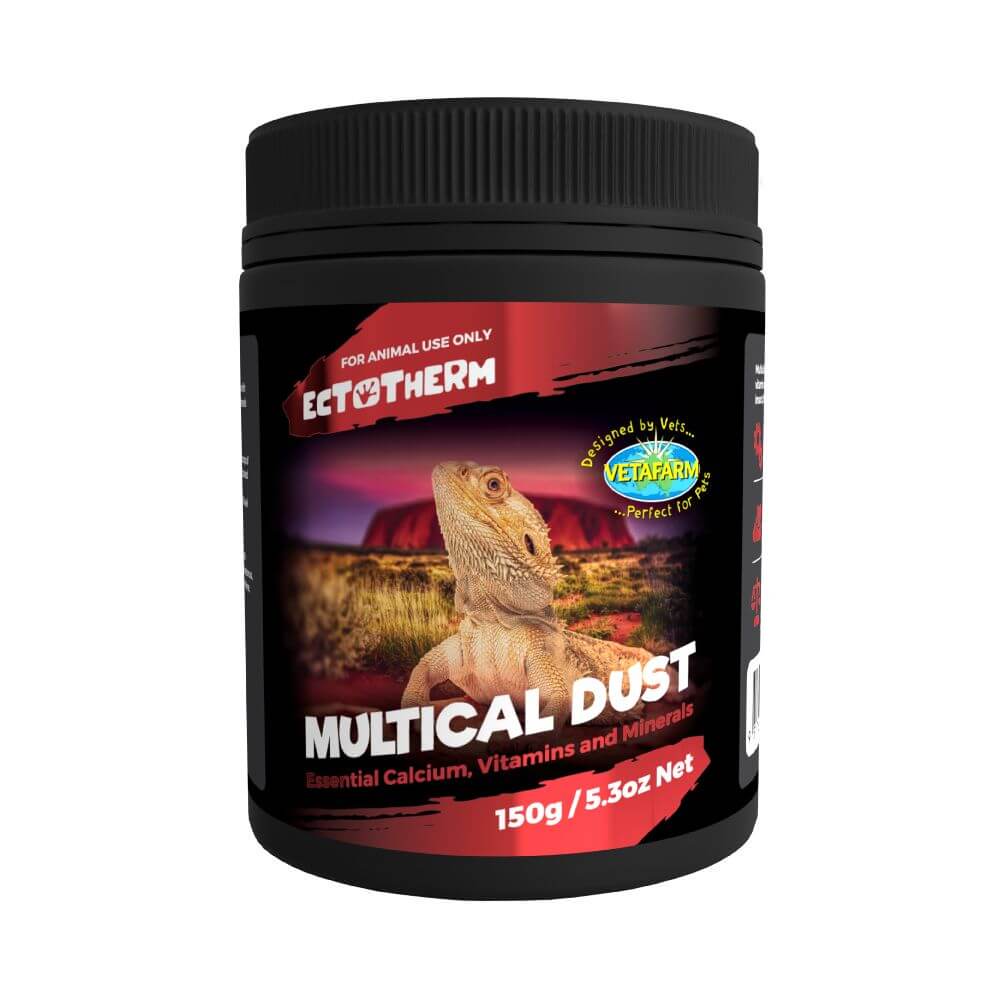
When used correctly, high-quality supplements take the guesswork out of nutrition. Ectotherm Multical Dust provides safe, controlled levels of Vitamin D3 that support optimal health.
Formulated by veterinarians, Ectotherm Multical Dust delivers the complete nutrition reptiles need to thrive, including calcium, vitamins, minerals and amino acids.
Suitable for: